
Beijing News: WeChat Rolls Out New Services for Foreign Visitors
Earlier this month, we told you about the introduction of online arrival cards for foreigners as part of a set of new National Immigration Administration “immigration and exit-entry management service policy initiatives implemented to ‘support and facilitate high-level opening-up and high-quality development.’ ”
The new online arrival platform, which launched Nov 20, can be accessed via, among other avenues, a WeChat mini program.
Recently, WeChat has also announced other features designed to facilitate the experience of foreign visitors to China.
What will it take to internationalise the renminbi? - OMFIF
Markets have noticed the more assertive language regarding the internationalisation of renminbi. Speaking at the fourth plenum of the Communist Party of China, Pan Gongsheng, governor of the People’s Bank of China, expressed this through three themes: promoting the use of the renminbi for trade, a gradual and orderly opening of financial markets and support of the offshore renminbi market.
While the second and third areas offer prospects for enhanced renminbi market functioning, the first one has major implications for cross-border payments, boosting the use of renminbi and reducing the use of the dollar for trade payments.
China is leveraging its role as the major trading partner of some 150 countries round the globe. This is happening already among Brics countries where national currencies are being used to pay cross-border trade. China is the major trading partner of countries in the Brics bloc, spearheaded by Brazil, Russia, India, China and South Africa, and countries involved with China’s Belt and Road Initiative are next in line to use the renminbi in trade.
China has recorded trade surpluses for many years with the rest of the world. In 2024, it had a surplus of $768bn for trade in goods. In the extreme this means that the rest of the world would have to find the equivalent of $3.4tn in renminbi to pay for imports from China. Part of this would be payments in renminbi for China’s imports of goods such as energy, worth $2.6tn. However, this is highly hypothetical as many of China’s trading partners are unlikely to accept renminbi.
This leaves an enormous amount of renminbi to be made available to China’s main trading partners through capital exports while keeping financial account restrictions in place. Compared with the dollar, which flowed out into the world as a result of US current account deficits, running surpluses requires mechanisms for renminbi to flow out of China.
For Brics and Belt and Road countries one way is to provide them with outward direct investment, portfolio investment and other investment with loans in renminbi. Another way is to ease non-Chinese issuances in the onshore panda bond market or offshore dimsum bond marke
The New York Times, The Morning: China’s green triumph, November 12, 2025.
Countries with big and quickly growing economies are taking advantage of China’s emergence as a renewable-energy superpower. They are going green in a hurry.
Somini and Brad wrote a striking paragraph about the change:
Countries like Brazil, India and Vietnam are rapidly expanding solar and wind power. Poorer countries like Ethiopia and Nepal are leapfrogging over gasoline-burning cars to battery-powered ones. Nigeria, a petrostate, plans to build its first solar-panel manufacturing plant. Morocco is creating a battery hub to supply European automakers. Santiago, the capital of Chile, has electrified more than half of its bus fleet in recent years.
China makes that possible, exporting solar panels, wind turbines, batteries and electric vehicles all over the developing world while investing billions in factories that make those things in the nations where they are sold….
…the falling price of China’s renewable tech has allowed developing countries to satisfy a larger percentage of their energy needs internally. It reduces their reliance on imported fuel and develops their economies.
“Emerging economies are a very important part of the story,” an environmental advocacy researcher told The Times. “The reason we should be paying attention is that they have the most people in the world, they have the largest number of poor people in the world, and their energy demands are growing. If these economies don’t change, there’s no chance for the world to get to a safer place.”
…China is investing heavily — nearly a quarter trillion dollars since 2011, they report, with most of that money going to what’s known as the global south. Adjusted for inflation, that is more money than the U.S. put into the Marshall Plan after World War II.
The Short Age of China’s Long Change
China’s everyday “normality” can feel deceptively old—for those born later than the 1990s at least: safe streets, two-day weekends, basic welfare, passports on demand, and Hollywood blockbusters. But as Liu Yuanju, research fellow at the Shanghai Institute of Finance and Law, stitches together the timeline of China’s compressed modernity, comforts now treated as timeless emerge as fragile gains of just a couple of decades. His piece is a reflective reminder that the past is indeed a foreign country, and that any serious conversation about China’s future needs a clearer memory of how recently this “normality” was built….
China is often described as a very safe country today, but that reality is relatively new.
Not long ago, criminal gangs made up of young men from Wenjiang Village, Tiandeng County, in Guangxi were carrying out robberies across large parts of Guangdong…
For those born in the 1970s and 1980s in rural areas, the experience of the rural collective accumulation system is still very vivid.
One example is the so-called “three deductions”, the village retention system under which village-level collective economic organisations withheld part of farmers’ income to cover three categories of spending: a public accumulation fund, a public welfare fund and management expenses….
…In the 1980s, provincial family-planning regulations across China generally required that any pregnancy outside the approved plan be terminated. …
The State Council’s 1952 Decision on Labour and Employment Issues effectively established the practice of an eight-hour workday and a six-day workweek, with Sunday as the only statutory day of rest….
The two-day weekend has, in fact, been in place for only thirty years….
It has been only twenty-four years since owning a car became a common aspiration for ordinary Chinese households….
Zhang Yuze: algorithms are not the culprit behind a polarised public
Lecturer in Beijing argues that algorithms are mere amplifiers of forces that long predate them—elite polarisation, partisan media, yawning inequalities and deep-seated psychological biases.
…Professor Chris Bail, a sociologist at Duke University, conducted a clever field experiment to test this directly. His team recruited highly committed Democratic and Republican Twitter users and paid them to follow a bot account that reposted political messages from the opposing side.
The design forcibly broke echo chambers and compelled participants to hear both sides. The results were unexpected. After one month, participants did not become more moderate or more understanding of the other side; they generally became more extreme….
Modern political science research suggests that ideological polarisation, meaning disagreement over specific policy positions, has not increased dramatically among ordinary citizens. However, affective polarisation has risen sharply. This refers to growing dislike, distrust, and hostility between partisan groups. It is rooted in identity rather than policy and is defined above all by out-group hate….
This distortion has two main sources. First, the core mechanisms of social media—identity performance and status competition—provide an ideal stage for extremists. Second, once extremists dominate the arena, moderates tend to fall silent under “the spiral of silence.” The result is a prism effect: users are left with the mistaken impression that most people on the other side resemble the loudest extremists they encounter online….
Therefore, effective interventions should abandon the futile pursuit of “neutral algorithms.” Instead, they should explore alternative designs that move beyond simple engagement optimisation—for instance, shifting to reward users’ stated preferences (content they judge to be valuable upon reflection) rather than their revealed preferences (content they click on impulsively), or designing for “constructive discourse.”
Ronnie Chan: Keep calm and try to stay alive
[Chan’s] cultural warning is as stark: a younger generation, overly enamoured of unfettered Western “freedom”, risks moral confusion and rebellion. What China needs now, in his view, is discipline, steadiness, and sensible patriotism.
On geopolitics, he is, if anything, more sanguine. The U.S.–China rivalry is “game over”, he contends—a test of stamina that China will outlast as America lapses into isolationist bouts. Finance, he said, has lured the West into short-termism and hollowed out industry, while China’s ballast remains its manufacturing heft, social patience, and the ability to navigate a more ruleless world.
Off the Beaten Track: How is Life in China's "Most Median City"?
I just spent several days exploring the city of Linfen (临汾) in southern Shanxi. Linfen could be the most average city in China - at least that was my hypothesis before arriving. But what does that even mean? And why does it matter? In this episode of Off the Beaten Track, I went to Linfen to try to answer those questions.
Swapping Urban Uncertainty for Auspicious Apples in a Corner of Rural Shanxi
This is the second article in my two-part Off the Beaten Track series of my visit to Linfen City in Shanxi, which I proposed might be the most median city in China. Catch up on Part 1 here.
Zhao Yushun: the last generation of Chinese smallholder farmers
China’s traditional smallholder farming is consolidating into larger-scale operations run by large growers or agricultural companies. Villagers lease plots for roughly 600–1,000 yuan [84-140 U.S. dollars] per mu a year and often return as hired labour on the same fields.
Zhao Yushun, co-creator of the Bilibili and YouTube channel 遇真纪事 (Encounters with the Real), has spent the last five years documenting the change. On September 21, 2025, he delivered a talk at YiXi, a leading speech and presentation brand in the Chinese-speaking world, on what he had seen on the backroads.
His account sticks to particulars: the gleaner stooping for leftover sweet potatoes; the “nail field” held for a grandson’s Friday supper; a former migrant after forty years in town, back on the land—tinged with pastoral nostalgia for the smallholder era….
Mathematician Qian Hong, son of top scientific clan, leaves US for China | South China Morning Post
A renowned mathematician who is also part of China’s Qian clan – a surname linked in the annals of Chinese scientific history to national pioneers in science and engineering – has become the latest US-based scientist to return to China.
After more than 40 years in the United States, Qian Hong has left his endowed professorship at the University of Washington to join the prestigious and private Westlake University in eastern China.
Qian’s appointment last month as a full-time chair professor with the university’s Centre for Interdisciplinary Studies in Hangzhou, Zhejiang province, reversed a long-standing family tradition of moving to the US and drew more attention than usual in China’s scientific community.
Few women in Chinese history have been as scorned – or as misunderstood – as Bao Si. For nearly three millennia, the queen has been remembered not as a person, but as a symbol: the beautiful femme fatale whose cold heart and unparalleled beauty brought down a dynasty.
According to legend, Bao Si was a queen so aloof she never smiled.
Desperate to amuse her, King You of the Western Zhou Dynasty (about 1046-771 BC) is said to have played a deadly prank: he lit the kingdom’s sacred beacon fires – meant to warn of invasion – just to watch the nobles rush in panic to his court.
A fish pond in southern China has gone viral online after its owner revealed that he feeds the fish 5,000 kilos of various chilli peppers daily, claiming this practice makes them appear more vibrant and taste better.
The fish pond, located in Changsha, Hunan province – a region renowned for its spicy cuisine – has recently become an online sensation after its owners were filmed feeding chilli peppers to the fish.
Rising star mathematician Wu Meng returns to China from Finland | South China Morning Post
Now affiliated with Hunan University, the award-winning professor solved a major part of Furstenberg’s conjecture dating to the 1960s.
In the 1960s, mathematician Hillel Furstenberg proposed a conjecture: that a number cannot appear “simple and highly regular” under two “independent” rulers simultaneously.
Put simply, if a number is written in a binary system – using only two digits or elements to represent a quantity – its sequence is relatively regular and simple.
In contrast, when rewriting that number in ternary – using three elements as its base – its sequence will almost certainly become relatively more complex and different in structure.
Top astrophysicist moves to Hong Kong to head new HKU institute | South China Morning Post
World-renowned astrophysicist Zhang Bing has joined the University of Hong Kong as a chair professor after nearly three decades in the United States.
Zhang left the University of Nevada, Las Vegas – where he was a distinguished professor of physics and astronomy – to become the founding director of the newly established Hong Kong Institute for Astronomy and Astrophysics (HKIAA) at HKU.
He said his role in Hong Kong was full-time, but he would continue supervising his PhD students in the US until they completed their studies.
World-renowned neurologist and consciousness research pioneer Steven Laureys has taken up a full-time university position in eastern China’s Zhejiang province.
The 56-year-old Belgian scientist joined Hangzhou Normal University earlier this year as a professor at its school of basic medical sciences, according to a university statement.
Before moving to China, Laureys spent decades in Europe and had a brief stint in North America. He is widely recognised as one of the first researchers to use brain-imaging technology to study consciousness and hidden awareness in patients who appear unresponsive.
With more than six decades of experience, veteran tailor Benny Woo has dressed some of Hong Kong’s most prominent figures, including tycoon Li Ka-shing and Cantopop star Andy Lau Tak-wah.
The 77-year-old, who has decided to close his eponymous street-level shop in Sheung Wan by the end of the month, has also witnessed how the city’s once-booming, world-famous tailoring industry has gradually waned amid changing fashion trends and disappearing shoppers.
“Business used to be great. Managerial staff at big international companies would always wear suits. But that is no longer the case after the pandemic. Even if my current rent drops by tens of thousands of dollars, I still would not survive,” he said, having been at the current shop for about two years.
2026 Chinese Government Scholarships Ready for Applications
The Chinese embassy has issued the announcement of scholarship applications for students interested in study in China beginning in 2026. The ABCF and the Barbados-China Returned Students Association now have a resource group of current and past students who are able to assist you with the application process, and with all aspects of preparation for study in China. If you are considering study in China, we would be happy to hear from you, by email or by WhatsApp at 1 246 288 1356. You may also reach us via the Contact page on our website.
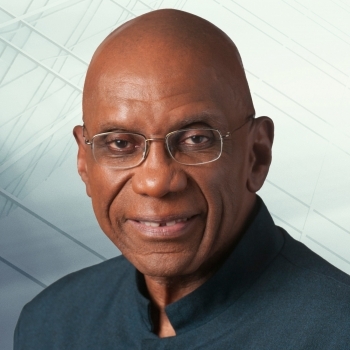
This weekly newsletter is put together by DeLisle Worrell, President of the ABCF. Visit us at Association for Barbados China Friendship | (abcf-bb.com).
Thanks to everyone who sent contributions for this week’s Update. Please send items of interest to me via the contact page at ABCF-BB.com or to info@DeLisleWorrell.com
The ABCF mission is to build a deeper understanding between the Chinese people and Barbadians and Caribbean people from all walks of life. The association’s focus is on personal experiences, people-to-people contact, cultural exchanges and exchanges of ideas, and the facilitation of travel, business and study. From the outset we aim to learn from and build on the experiences of the Caribbean and China, and to develop mutual understandings and support that will be to the benefit of both sides.