
Da Wei: China does not want America’s job
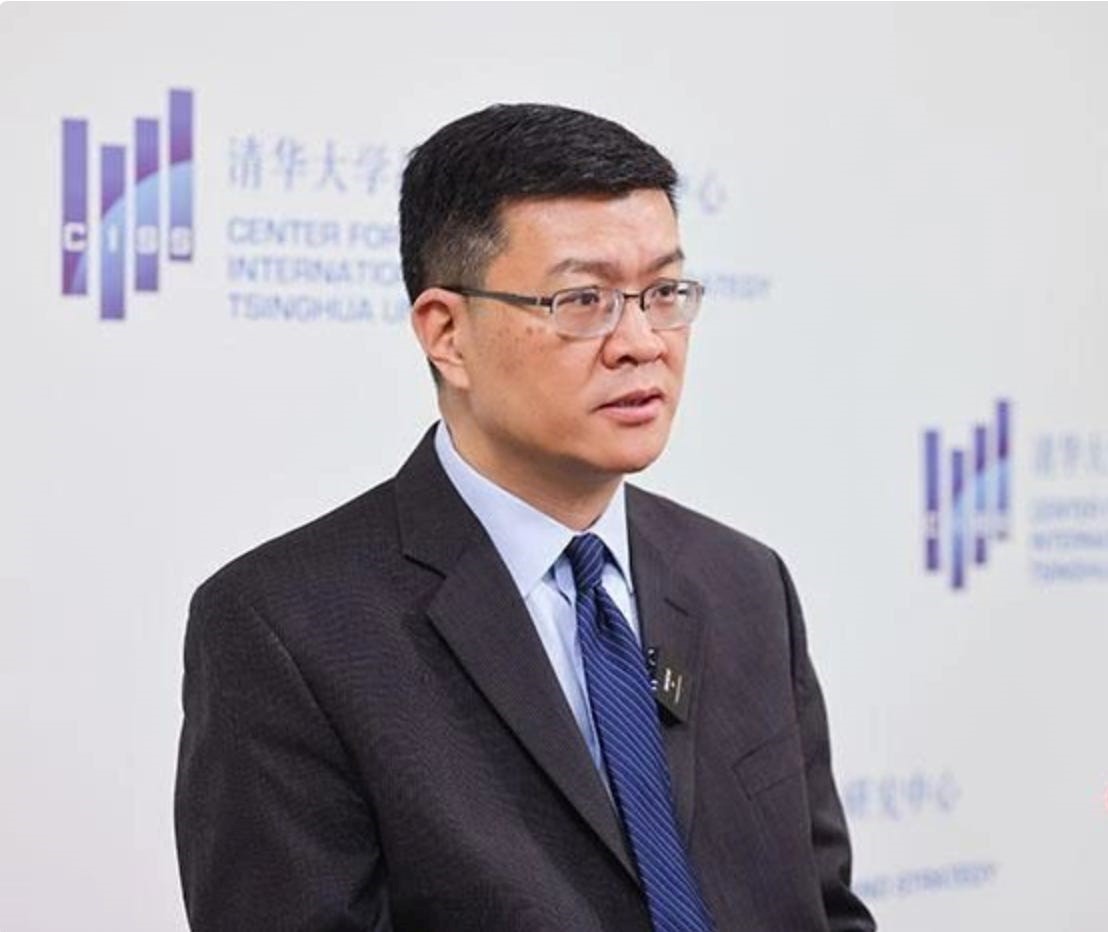
As the U.S. pulls back from parts of the international order it once helped to build, questions are growing over whether China will seek to fill the space Washington leaves behind. Speaking to The Paper, an influential Shanghai-based media outlet, Da Wei, one of China’s best-known international relations scholars, rejects that premise.
In his view, Beijing neither seeks nor intends to replace the United States in filling any so-called “vacuum”, nor should it be expected to do so. China’s position, he argues, is to integrate into the multilateral system and help improve it, not to replace one hegemon with another.
The Man Ordinary Chinese Chose to Trust
Thousands lined up on Saturday in Suzhou, in China’s eastern Jiangsu province, to bid a final farewell to Zhang Xuefeng, the education influencer who died suddenly after suffering cardiac arrest during exercise. Faced with the spontaneous, surging crowds outside the Suzhou Funeral Home, any criticism or controversy that once clung to his name looked suddenly weightless.
As the Chinese saying goes, the people see with clear eyes. In an era when the rich and the powerful, in China and beyond, keep shattering expectations and exposing themselves as little more than self-serving mediocrities, ordinary people have not lost their judgment. They know who is fake and who is authentic, who is sanctimonious and who is sincere, who speaks the language of virtue while protecting privilege, and who actually cares about the fate of ordinary families.
US-China Heartland Association Partner Events
Recent
Six years after the global pandemic, xenophobia and discrimination remain a persistent reality for Asian Americans, driven in part by the enduring "perpetual foreigner" stereotype.
Join Committee of 100 on Wednesday, March 25, 2026 from 2 p.m. - 3 p.m. ET / 11 a.m. - 12 p.m. PT for a conversation highlighting new findings from the second report in the "2025 State of Chinese Americans survey" four-part series, examining how the assumption of foreignness shapes experiences of belonging for Chinese Americans and broader Asian American communities.
Forthcoming
CHINA Town Hall (CTH), a program offered by the National Committee on U.S.-China Relations, provides a snapshot of the current U.S.-China relationship and examines how that relationship reverberates at the local level – in our towns, states, and nation – connects people around the country with U.S. policymakers and thought leaders on China.
The national webcast will run from 5:30-6:30 PM CT, featuring two veteran senior diplomats discussing the current state and future trajectory of the U.S.-China relationship: Stephen Biegun, former U.S. deputy secretary of state, and Sarah Beran, former deputy chief of mission at the U.S. Embassy in Beijing and former senior director for China and Taiwan affairs at the White House National Security Council.
Against that increasingly settled consensus, Yu Yongding has stood out as a notable dissenter. One of China’s most influential economists, and a former member of the monetary policy committee of the People’s Bank of China, the central bank, Yu has argued with unusual clarity and consistency that the prevailing diagnosis is wrong. In his view, there is no such thing as a “consumption-driven” growth model. China’s growth, he insists, should still rest on investment, and the country still has ample room to invest.
Yu contends that much of the current debate muddles together short-term macroeconomic stabilisation with long-term growth theory. In the long run, growth is driven by capital accumulation, labour, and technological progress, not by consumption as such. Consumption can support growth in the short run when effective demand is weak, but it cannot, by itself, raise productive capacity or an economy’s long-term growth potential.
If the goal is to raise consumption on a lasting basis, he argues, the key is not to treat consumption itself as the source of growth, but to raise households’ permanent income. And under current conditions, he sees faster infrastructure investment, financed by a more expansionary but still sustainable fiscal policy, as the most practical way to do that.
Hong Kong holds No 3 ranking as global capital hub amid market volatility | South China Morning Post
Latest index underscores Hong Kong’s role as a leading global finance hub, with strength in fintech, banking and insurance.
Hong Kong retained its position as Asia’s top financial centre and ranked third globally, while also leading in fintech, banking and insurance, according to the latest Global Financial Centres Index released on Thursday.
The twice-yearly report assessed the competitiveness of 120 financial markets. Hong Kong scored 756 points, just one point behind London and two points shy of top-ranked New York, while edging Singapore by a single point. The index is compiled by Z/Yen Group and the China Development Institute.
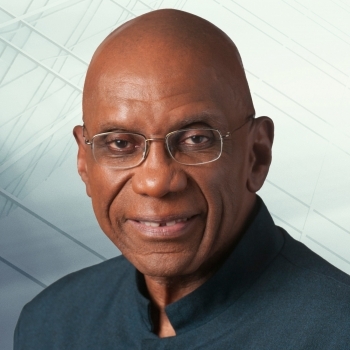
This weekly newsletter is put together by DeLisle Worrell, President of the ABCF. Visit us at Association for Barbados China Friendship | (abcf-bb.com).
Thanks to everyone who sent contributions for this week’s Update. Please send items of interest to me via the contact page at ABCF-BB.com or to info@DeLisleWorrell.com
The ABCF mission is to build a deeper understanding between the Chinese people and Barbadians and Caribbean people from all walks of life. The association’s focus is on personal experiences, people-to-people contact, cultural exchanges and exchanges of ideas, and the facilitation of travel, business and study. From the outset we aim to learn from and build on the experiences of the Caribbean and China, and to develop mutual understandings and support that will be to the benefit of both sides.